Eu sei o que está pensando:
"Nossa, você fez três desenhos em uma aula só?!"
... Não. O primeiro desenho foi finalizado a meia-noite, um dia antes da aula. O sono falou mais alto e me fez registrar a data errada. Os outros dois, sim, foram realizados durante a aula.
Eu tenho muito o que dizer aqui, então prepare os óculos de leitura.
Agora sim, falando do desenho em si. O primeiro, a da Nyxa Vox, que já apareceu em imagens anteriores. Apesar da aparência, este desenho não representa uma dupla personalidade. Ele retrata uma parte da história da Nyxa.
I know what you're thinking:
"Wow, you made three drawings in one class?!"
... No. The first drawing was finished at midnight, a day before the class. Sleep got the better of me and made me record the wrong date. The other two, yes, were made during the class.
I have a lot to say here, so put on your reading glasses.
Now, talking about the drawing itself. The first one, Nyxa Vox, who has already appeared in earlier images. Despite appearances, this drawing does not represent a split personality. It portrays part of Nyxa's story.
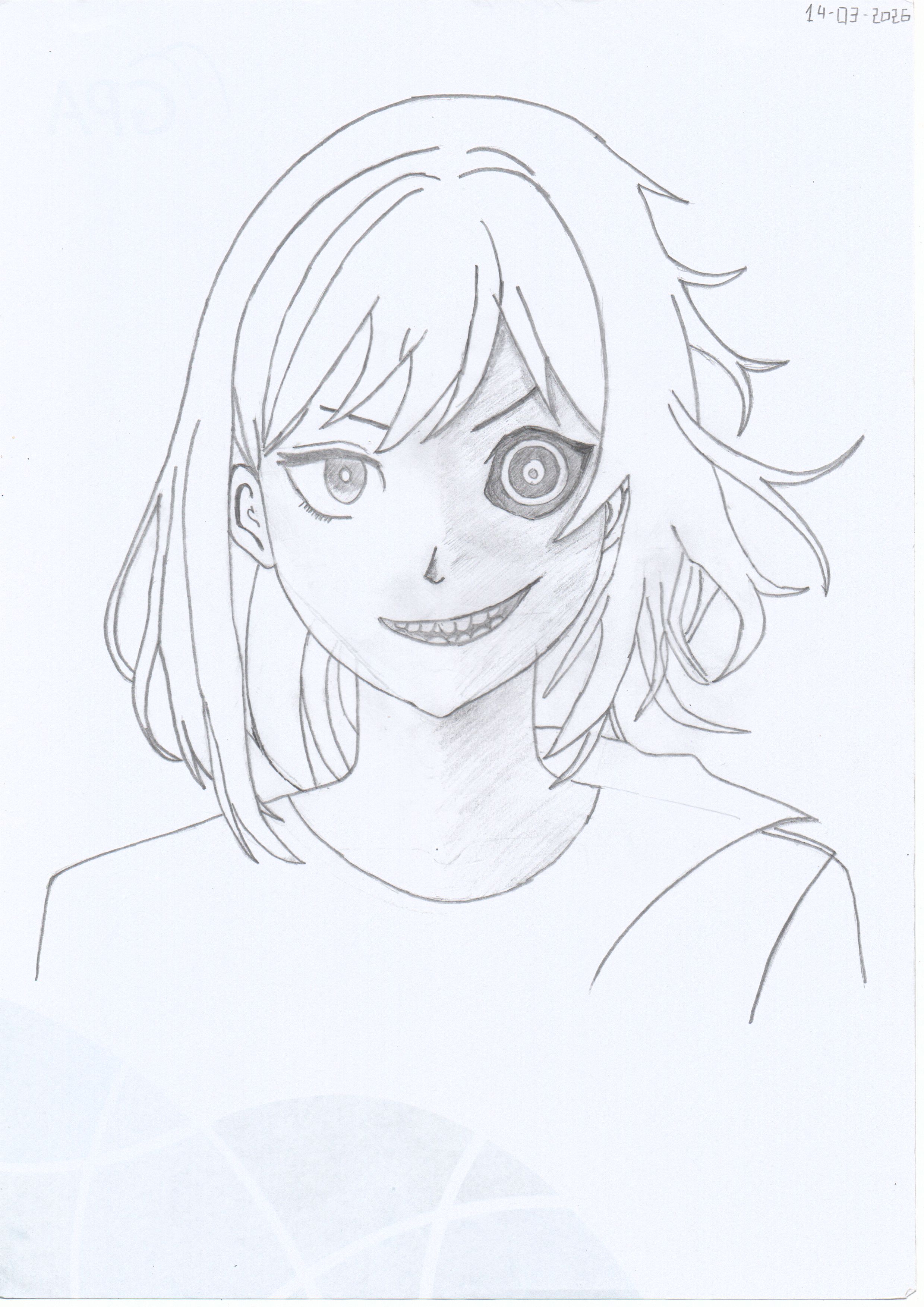
Tempo de desenho - aprox. 3h20
Drawing time - approx. 3h20
De um lado, vemos a atriz, um veículo que interpreta a loucura em um teatro, diante do público.
Do outro, vemos a loucura. A personagem que se banha no sangue dos inimigos e em sua própria perdição.
A alma que encanta a multidão.
A insanidade que se deleita em seu próprio sangue.
Em comum, compartilham o sorriso mortal que permeia a escuridão.
Até que a última gargalhada seja a única canção.
O próximo desenho tem uma história interessante por trás.
No anterior, você pode notar traços rígidos e grossos.
Isso dá um aspecto legal e coerente com a poesia que escrevi pois estava me sentindo inspirado de repente?
Sim.
... Mas não foi proposital.
Lembra que comentei sobre perfeccionismo mais atrapalhar do que ajudar algumas páginas anteriores? Pois é. Desde o primeiro desenho, eu tinha um hábito que consumia muito do meu tempo de desenvolvimento. O motivo era simples: ainda não separava o desenho em etapas.
A sequência de elaboração de um desenho, em termos simples, seria em forma de fases sequenciais:
Formas geométricas & Esboço -> Retoques e ajustes -> Finalização.
A minha sequência era essa:
Formas geométricas & Esboço + Retoques e ajustes + Finalização.
Tudo de uma vez só, ao mesmo tempo.
Ficava constantemente retrabalhando o esboço. Eu estava literalmente lapidando o esboço. Não conseguia passar para a próxima etapa até que o círculo, a proporção, a curva, qualquer coisa que fosse no esboço, estivesse perfeito.
O professor, depois de ver o meu desenho, disse:
"Faça as linhas bem leves e de uma vez só. Não fique ciscando a folha. Se ficar ruim, você corrige depois. É muito mais fácil avaliar as proporções durante o esboço do que quando o desenho já está sendo finalizado."
Depois disso, e depois de dar conta da minha insegurança mais uma vez... Eu liguei o modo F%$@-se.
Eu só pensei:
"Quer saber? F$%@-se. Vou desenhar direto. Não vou ficar ciscando. Vou confiar no esboço. Não vou pensar em proporções ou frações. Se ficar ruim, ficou, vamos pro próximo. Não vou pensar na posição disso, posição daquilo. Vou olhar a referência e desenhar."
O círculo caiu de vinte para dez minutos.
Os olhos, de trinta para quinze.
Pela primeira vez, eu desenhava antes de julgar.
No fim, tive uma ilustração que teve curvas mais suaves e traços finos.
On one side, we see the actress, a vessel who performs madness in a theater, before the audience.
On the other, we see the madness. The character who bathes in the blood of enemies and in her own downfall.
The soul that enchants the crowd.
The insanity that delights in its own blood.
What they have in common is the deadly smile that permeates the darkness.
Until the last laugh is the only song.
The next drawing has an interesting story behind it.
In the previous one, you may notice rigid and thick strokes.
Does that give a cool look consistent with the poetry I wrote because I suddenly felt inspired?
Yes.
... But it wasn't intentional.
Remember I mentioned perfectionism hurting more than helping a few pages back? Well, there it is. Since the first drawing, I had a habit that consumed a lot of my development time. The reason was simple: I still didn't separate the drawing into stages.
The process for developing a drawing, in simple terms, goes through sequential stages:
Geometric shapes & Sketch -> Touch-ups and adjustments -> Finishing.
My sequence was this:
Geometric shapes & Sketch + Touch-ups and adjustments + Finishing.
All at once, at the same time.
I constantly reworked the sketch. I was literally polishing the sketch. I couldn't move on to the next step until the circle, the proportion, the curve, whatever it was in the sketch, was perfect.
The teacher, after seeing my drawing, said:
"Make the lines very light and in one go. Don't keep nibbling at the sheet. If it turns out bad, you fix it later. It's much easier to assess proportions during the sketch than when the drawing is already being finished."
After that, and after realizing my insecurity once again... I turned on F%$@-it mode.
I just thought:
"You know what? F$%@ it. I'm going to draw straight away. I won't keep nibbling. I'll trust the sketch. I won't think about proportions or fractions. If it turns out bad, so be it, move onto the next. I won't think about the position of this or that. I'll look at the reference and draw."
The circle dropped from twenty to ten minutes.
The eyes, from thirty to fifteen.
For the first time, I drew before judging.
In the end, I had an illustration with softer curves and fine strokes.
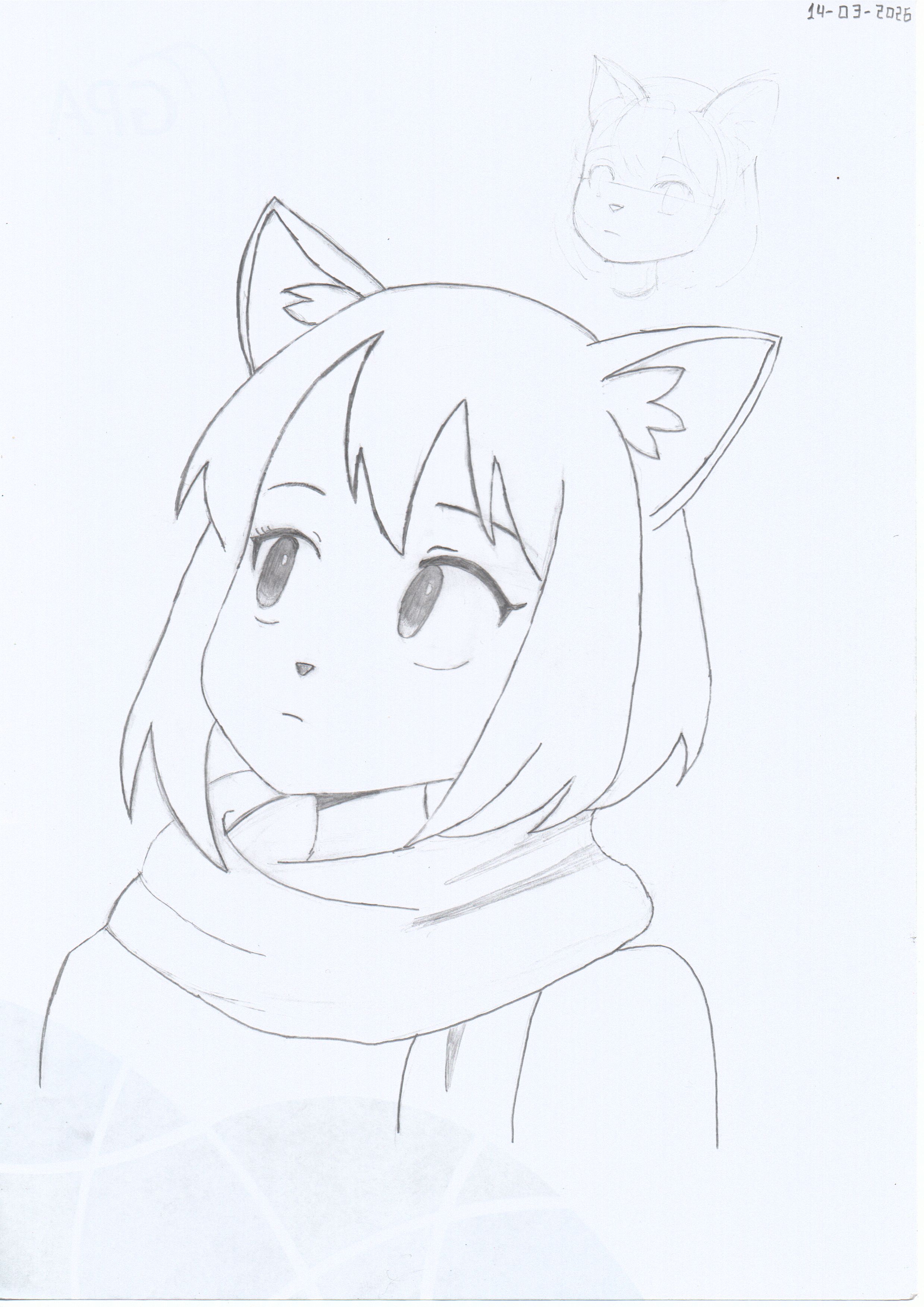
Tempo de desenho - 2h30
Drawing time - 2h30
Além de estar bem fiel à referência, esse desenho saiu bem mais rápido. Pela primeira vez, tive a sensação de que eu não estava brigando comigo mesmo durante o processo. Eu simplesmente estava... desenhando.
Foi uma experiência que me fez olhar o resultado e dizer:
"Nossa... Desenhar é muito legal."
Depois disso, eu lembrei do meme:
Depois da Lyssa, que é um rosto humano com orelhas de gato, resolvi aumentar a dificuldade e partir para um personagem lobo. O processo continua iniciando por um rosto humano. Depois, adiciona-se o focinho (que é como encaixar uma pequena caixa na região da boca), seguido por pelos e orelhas.
Besides being quite faithful to the reference, this drawing came out much faster. For the first time, I had the feeling that I wasn't fighting with myself during the process. I was simply... drawing.
It was an experience that made me look at the result and say:
"Wow... Drawing is so cool."
After that, I remembered this meme:
After Lyssa, who is a human face with cat ears, I decided to increase the difficulty and move on to a wolf character. The process still starts with a human face. Then, the snout is added (which is like fitting a small box onto the mouth area), followed by fur and ears.
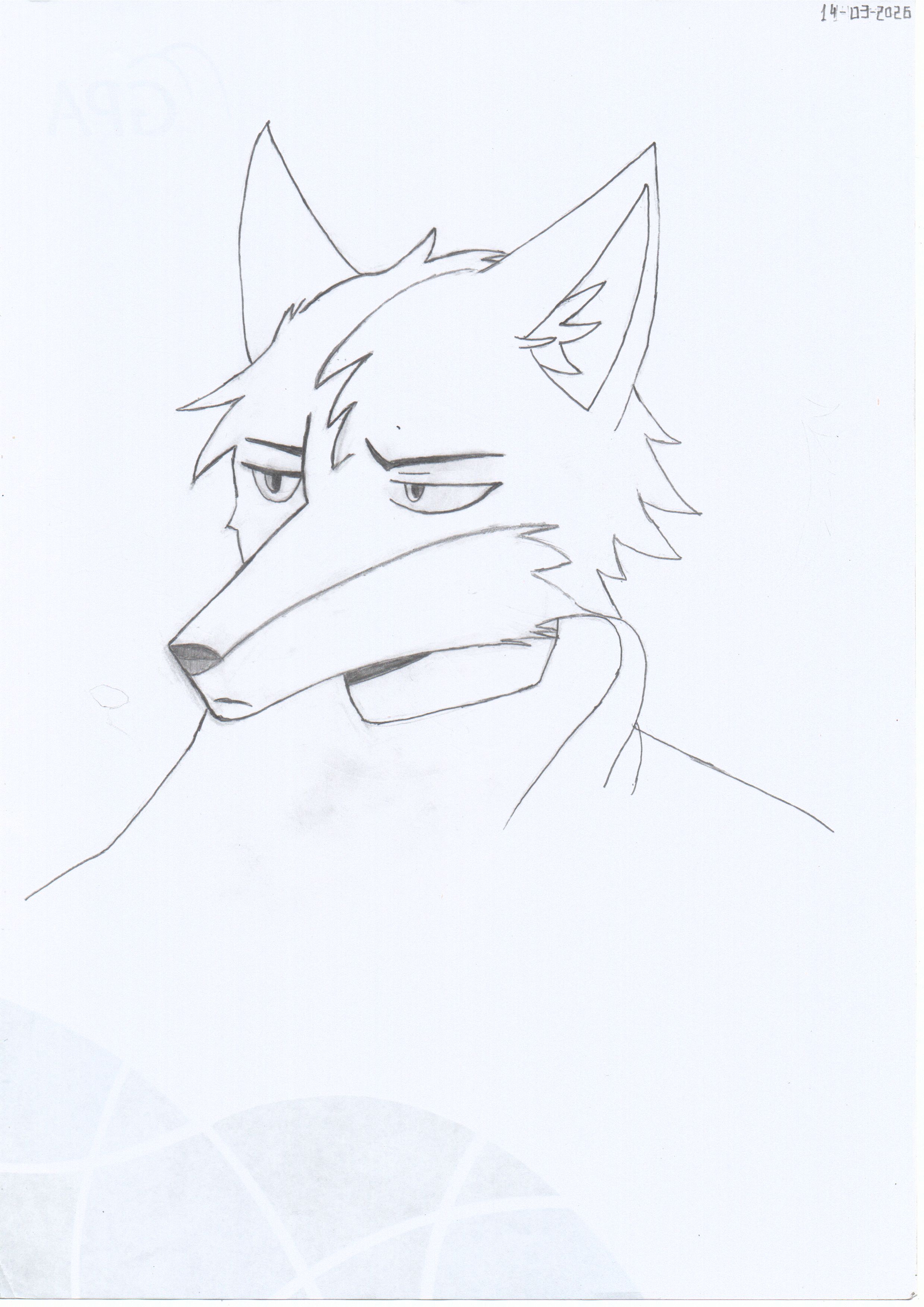
Tempo de desenho - 3h20
Drawing time - 3h20
Esse aqui segue a direção da narrativa que desenvolvi lá em cima, então não tenho muito o que comentar aqui.
Exceto o fato do professor olhar meu desenho, depois me olhar e perguntar se eu era um furry.
Escrito em 7 de Julho de 2026
< Voltar
This one follows the direction of the narrative I developed above, so I don't have much to comment here.
Except for the fact that the teacher looked at my drawing, then looked at me, and asked if I was a furry.
Written on July 7, 2026
< Back
Comments